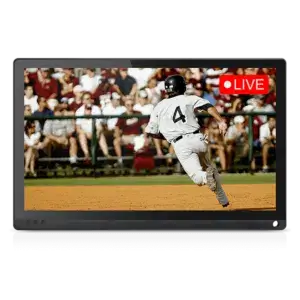
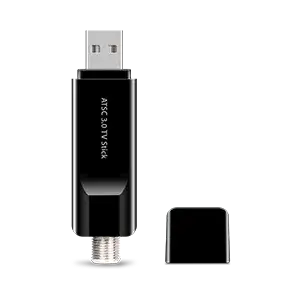
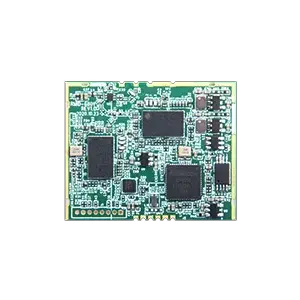
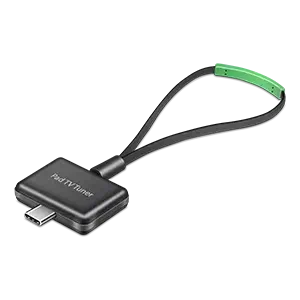
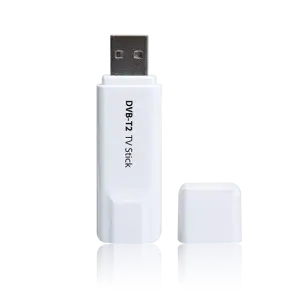
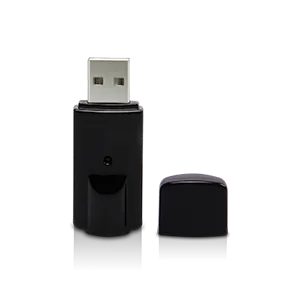
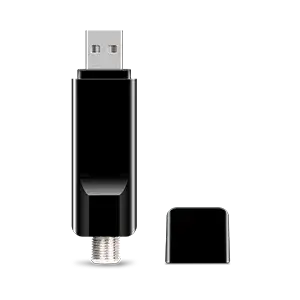
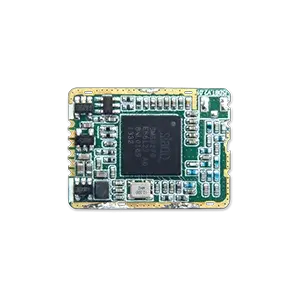

ATSC 3.0 tuner, also known as next gen TV tuner, refers to a type of tuner designed to receive broadcasts using the ATSC 3.0 standard. Compared with ATSC 1.0, ATSC 3.0 brings several advancements, including better video and audio quality, support for higher resolutions such as 4K Ultra HD, improved reception for mobile devices, targeted advertising capabilities, and interactive features.
ATSC 3.0 signals are not inherently stronger than ATSC 1.0 signals in terms of power output. However, ATSC 3.0 offers improvements in robustness and efficiency in signal transmission, which can result in better reception quality and coverage compared to ATSC 1.0 under certain conditions.
An ATSC tuner works by capturing digital television signals through an antenna, demodulating the received signals to extract digital data, decoding this data to interpret video, audio, and other information, and finally outputting the decoded signals to a television or display device for playback, enabling users to access over-the-air digital television channels without a subscription.
ATSC supports 4K Ultra HD resolution. The latest iteration of the standard, ATSC 3.0, enables the transmission of content in 4K resolution, also referred to as 2160p. This advancement empowers broadcasters to deliver high-definition television content with notably higher resolution and enhanced picture quality compared to standard high-definition (HD) broadcasts. Viewers can experience 4K content over-the-air through ATSC 3.0, provided their television sets or devices are equipped with compatible ATSC 3.0 tuners.
ATSC, the Advanced Television Systems Committee, serves as the standard for digital television transmission across terrestrial, cable, and satellite networks in the United States and elsewhere. Within the ATSC framework, various resolutions are supported, encompassing 1080i (interlaced) and 1080p (progressive scan), alongside other formats like 720p and 480i/p. Consequently, broadcasters have the flexibility to transmit content in 1080p resolution should they opt to do so, given the adaptable nature of the ATSC standard.
NTSC and ATSC are both standards used for television broadcasting, but they differ in several key aspects:
